Domain Portfolio Tool vs Registrar Dashboard: Can't I Just Use My Registrar?
 Bret Siers
You log in to find one renewal date. It isn't the account you thought it was in. So you open a second tab, sign in somewhere else, and there it is. Then you remember the two you bought during that late-night idea, and those live somewhere else again.
Three logins. Three password resets, probably. And a small, quiet thought you didn't expect. Which one is actually mine?
Here's the thing. They all are. That's the part that catches you. You didn't lose track because you were careless. You lost track because "my domains" was never one place. It was three. Maybe five. Each one is a real account with a real login, and each one only ever shows you its own corner.
I get it. Nobody warns you about this moment. You just feel it one afternoon, tabs open, trying to answer a simple question about things you already own.
So let's answer the honest question underneath it. Can't I just use my registrar for all of this? It's fair, and it deserves a straight answer. Now, the bigger case, that you need one view sitting above every registrar, is its own subject, and worth a piece of its own. Take that part as settled ground. This piece stays on the narrower question, the one you actually type into a search bar late at night. Can't I just use the dashboard my registrar already hands me?
Can't I just use my registrar's dashboard?
Yes, for the domain that lives inside it. No, for anything outside it.
Registrars are genuinely good at what they do. They register a name the second you want it. They renew it on time. They handle DNS, the plumbing that points a name at the right place. You can turn on auto-renew, update contact records, transfer a name in or out. For a single account, a modern registrar dashboard is clean, capable, and honestly kind of a relief. Registrars are excellent at registering, renewing, and pointing your DNS.
So let's be clear about the line. If everything you own lived in one account, this article wouldn't need to exist. You'd log in, see everything, be done. No second tab. No quiet question.
The gap isn't about quality. It's about scope. A registrar dashboard is built to see one account, because that's the account it manages. It was never designed to see the ones it doesn't hold. And most of us, without ever deciding to, end up holding domains in more than one place.
What your own dashboard can't see
So walk it through, one login at a time. Open GoDaddy and it does its job beautifully. Every name you registered there, each renewal date, the DNS, right in front of you. It just has no idea about the two you moved to Cloudflare. Open Cloudflare and it's the same story in reverse, complete about its own account and silent about the one at GoDaddy. Namecheap, Porkbun, wherever else a name happened to land, each screen tells the full truth about the account you're signed into and nothing about the rest.
That's the real answer to "can't I just use my registrar's dashboard." Your own dashboard shows you everything in the account you logged into, and only that account. It isn't a knock on any of them. Seeing across all of them at once is a different job, and the full case for that layer above lives in manage domains across multiple registrars.
And your domains almost never live in one account. Think about how they got there. One came from a promo years back, so it sits at GoDaddy. A couple moved to Cloudflare when the pricing made sense. Namecheap has the one you grabbed on a whim. Porkbun holds the two from an idea you still half believe in. Different years, different reasons, different logins. Nobody decides to scatter their domains. It happens the way a junk drawer happens. One reasonable choice at a time, until nothing lines up.
You feel it in small, ordinary ways. A renewal you almost miss because it lived at the registrar you check least. A name you forgot you still owned until the charge showed up. A moment of counting on your fingers, unsure whether it's five domains or six, and giving up because no single screen would just tell you. None of that is carelessness. It's simply the edge of what any one dashboard was ever built to reach.
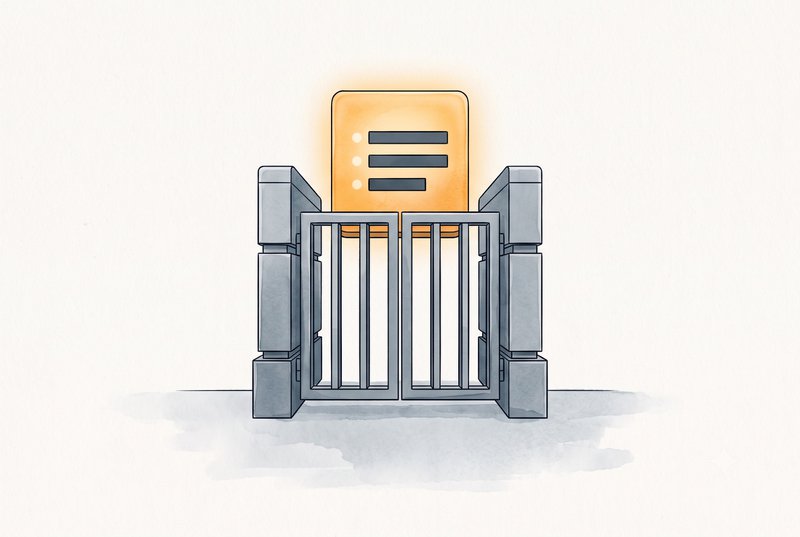
GoDaddy's cross-registrar view is real, but it sits behind Discount Domain Club, a membership for domain investors, leaving the everyday owner outside the gate.
Even the registrars themselves see the gap
Here's the part that tells you this pain is real, not something a small company invented to sell a fix. GoDaddy is building for it.
GoDaddy already has a cross-registrar view in beta, a way to track domains registered elsewhere from inside a GoDaddy account. Think about that for a second. GoDaddy benefits most from you keeping everything in one account, and it still built the thing you've been wishing existed. When even the company that profits from you consolidating admits domains scatter, the gap is real.
But read the fine print. That view sits behind a paid membership built for domain investors, the people who buy and sell at volume. So the one view exists, but it's pointed at the person treating domains as inventory to move. The person who owns six domains for six real ideas, and just wants them in one calm place, is left outside the gate.
That's the whole tension in one product. The problem is validated. The solution is aimed at the wrong owner. For most people, scattered domains aren't a logistics problem. It's the feeling of not seeing what you already own.
The SiteWarming perspective
You bought these domains because each one held a possibility. The problem was never that you stopped caring. It's that you could never see them in one place, so the options they carried went quiet with them. That's the worldview SiteWarming is built on. A domain you own is an open option, and you can't do anything with an option you don't know you have. So the point was never a tidier dashboard. It's getting your whole set into one honest view. Managing every domain across every registrar is the way in, not the destination. From there you can Launch the ones you choose, so a name that mattered enough to buy becomes reachable again. But the next step isn't really the point. Once you can see the whole set, you can finally make a decision about any of it, or simply keep your options open. That's the whole idea behind what is SiteWarming.
You don't have to leave your registrars
Let me be clear about what this isn't, because the moment someone says "one view above your accounts," it sounds like a pitch to move everything. It isn't.
You don't have to transfer a single domain. You don't have to leave GoDaddy or Cloudflare or the registrar you've used for a decade and genuinely like. Your names stay exactly where they are, renewing where they renew, pointing where they point. The registrars keep doing the job they're good at.
So "my dashboard" finally means all of it, not the third you happen to be logged into. Nothing here competes with your registrars. You've quietly needed both this whole time.
If you want the manual version first, there's nothing wrong with starting on paper. You can build a domain portfolio spreadsheet template and list every name, every registrar, every renewal date in one place by hand. It'll get you partway, and it'll show you exactly why a live layer beats a static file. And when you want the full version of the idea, the pillar carries it, manage domains across multiple registrars.
So, can you just use your registrar? For registering, renewing, and pointing, yes. Absolutely. Keep it. For seeing everything you own in one honest view, that was never its job. That's the layer above.
You own these. All of them. You should be able to see them that way.
Share this article
Ready to Transform Your Domain Portfolio?
Start building real value with your domain investments today.