Why ChatGPT and AI Tools Can't See Parked Domains
 Bret Siers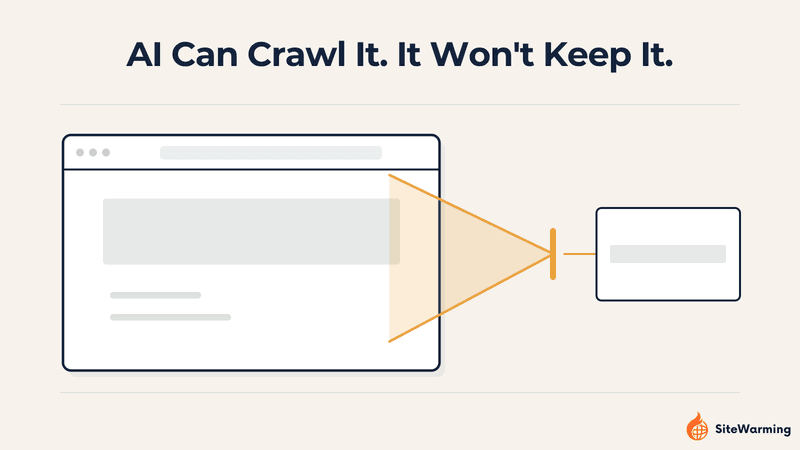
AI tools like ChatGPT can't see parked domains because they don't browse the live web in real time; they learn from filtered training snapshots, and parking pages get filtered out as thin, templated, commercially generated content. A parked domain isn't hidden on purpose; it just never survives the filtering step that turns raw web data into training data.
How do AI models actually learn about the web?
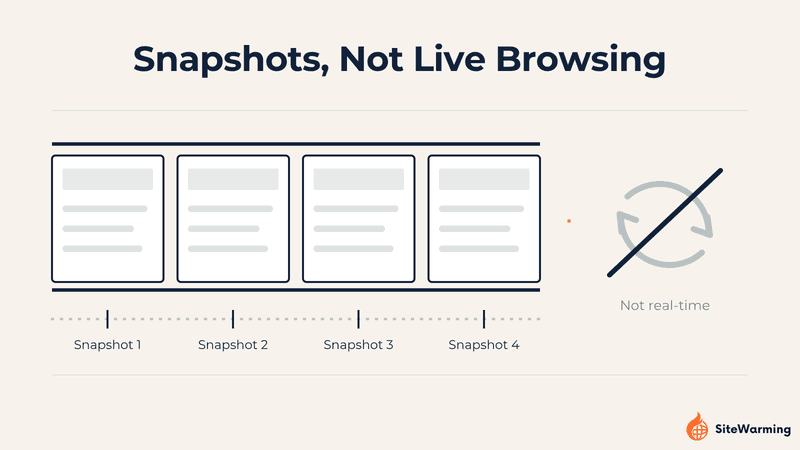
Models don't browse the internet the way you do, live, on demand. They learn from static snapshots of the web collected and processed ahead of time. That distinction matters more than it sounds like it should: whatever your domain looks like at the moment of one of those snapshots is what the system carries forward, sometimes for a long time. The requirement is the same across every system doing this, it needs certainty about what it's looking at.
Humans are good at inferring intent from minimal pages. You can look at three words and a logo and guess what a company does. Machines mostly can't do that. They parse what's actually there, not what you meant to put there. A beginner's guide to a machine-readable website covers what "actually there" means in practice.
Why does filtering matter more than crawling?
Getting crawled isn't the hard part. Surviving the filtering step is.
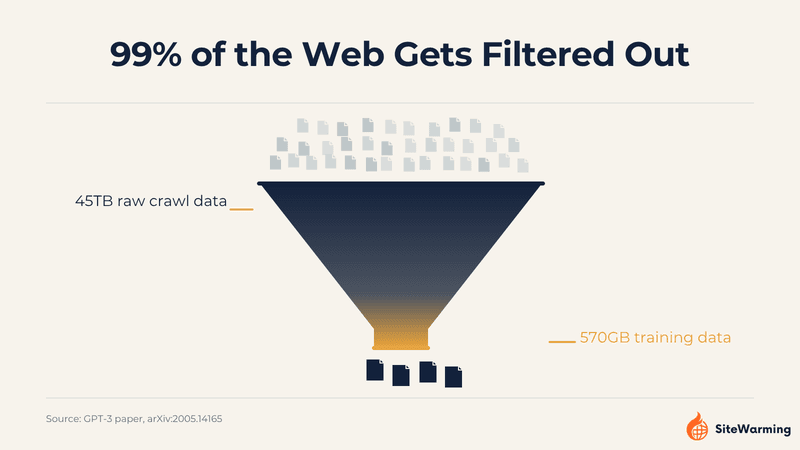
The GPT-3 paper is explicit about the scale of this: the Common Crawl data underpinning the model started as roughly 45TB of compressed plaintext and came out the other side of filtering at 570GB (Brown et al., Language Models are Few-Shot Learners, 2020). That's the overwhelming majority of raw web text discarded before any of it becomes training data.
Parked domains are exactly the kind of content that gets cut. They're thin by construction, no content beyond an automatically generated advertising banner and a handful of boilerplate links. A filtering pipeline built to separate signal from noise isn't going to keep a page that is mostly noise by design.
This isn't a new observation, either. Security researchers built a classifier specifically to detect parked domains at scale, precisely because they're so structurally distinctive; templated, ad-driven and content-free (Parking Sensors: Analyzing and Detecting Parked Domains, NDSS Symposium, 2015). That paper is a decade old now, which is rather the point: parking pages have been trivially machine-identifiable for a very long time.
Do AI systems treat parking pages differently than 404s?
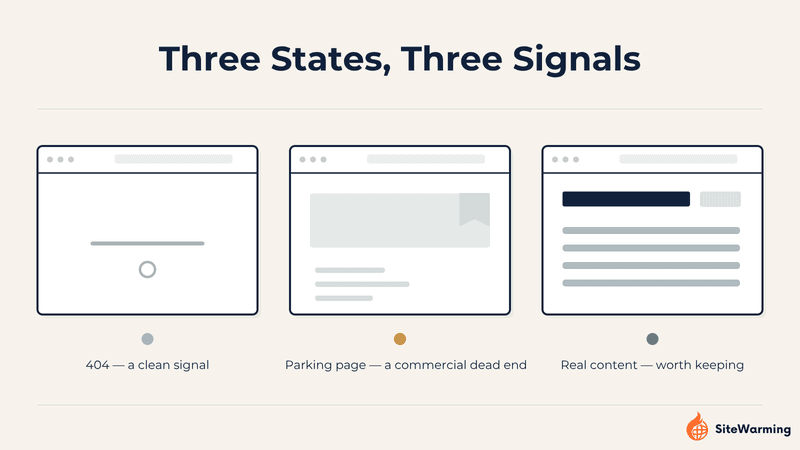
Yes, and not in parking's favor. A 404 is a clean signal: nothing is here. A parking page is a commercially active dead end; it returns a real HTTP 200, it gets crawled, and it still contributes nothing.
See Parking Pages vs. 404 vs. Empty Sites for the full breakdown of how these three states read to a crawler, and parked domain vs. 404 vs. coming soon for the same comparison from the visitor's side. The short version for AI systems specifically: a parking page occupies a slot in the training pipeline without earning a place in it.
Why does absence compound over time?
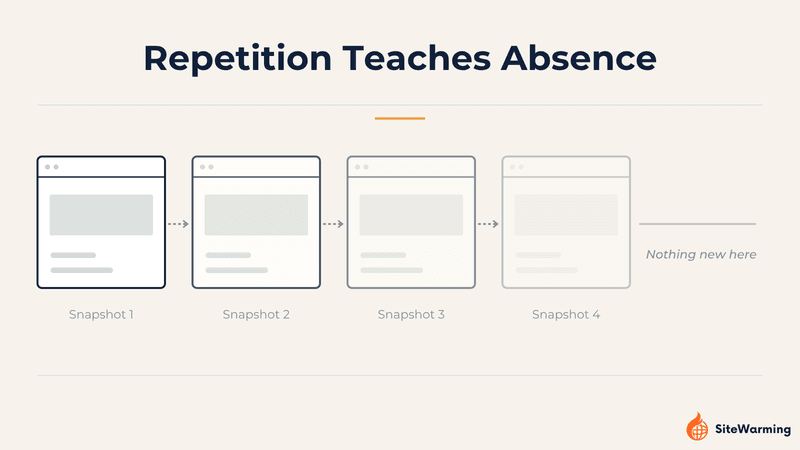
Training happens on repeated snapshots taken over time, not one single crawl. A domain that shows the same thin, templated parking page across multiple snapshots doesn't just fail to make an impression once; it teaches the system, repeatedly, that there's nothing here. That's a pattern, and pattern is exactly what these systems are built to pick up on.
White Space Is Not Luck, It's Pattern Recognition covers why consistent small signals compound faster than people expect, in the other direction: the same mechanism that rewards showing up also punishes staying absent. Why AI search ignores most websites covers the broader version of the same failure.
Which AI crawlers should you actually care about?
"AI can't see my domain" usually means one or more of these specific crawlers never found anything worth keeping.
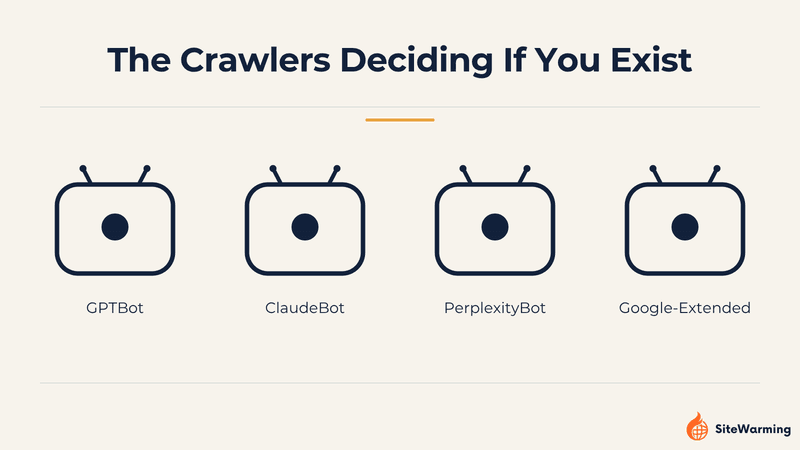
| Crawler | Operated by | What it's used for |
|---|---|---|
| GPTBot | OpenAI | Training data collection for future models |
| ClaudeBot | Anthropic | Training data collection for future models |
| PerplexityBot | Perplexity | Real-time retrieval for AI-generated answers |
| Google-Extended | Controls use in Gemini and AI features, separate from standard Googlebot |
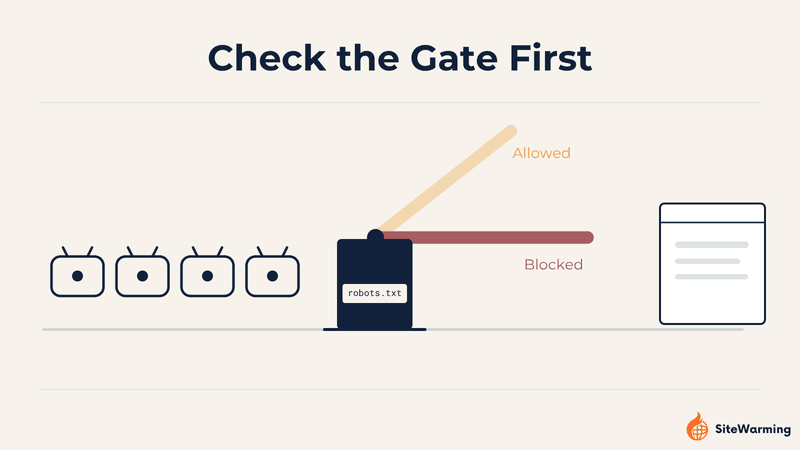
Each respects robots.txt directives, which means the first practical question isn't just "is there content here": it's "am I even letting these crawlers in." How AI crawlers decide what to index and what to skip goes deeper on the decision itself.
What should you actually do with a parked domain?
Three changes actually move the needle:
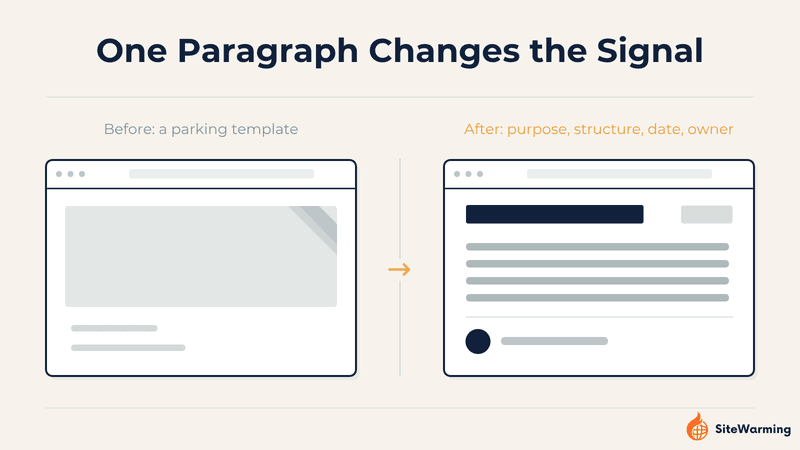
- Replace the parking template with real intent. Even a single paragraph that states what the domain is for, in plain language, is a fundamentally different signal than an automatically generated ad page. This doesn't require a full site, it requires the page to say something true about what you're building.
- Use structural clarity. Headings, a visible author or owner, a date, and plain language all help a system parse what it's looking at with more certainty. This is the same legibility argument that shows up in What is SiteWarming?: structure isn't decoration, it's how a machine confirms what a page is claiming. Structured data on a domain before launch covers the schema side of the same idea.
- Maintain consistency without rotating templates. Don't swap designs or messaging every few months hoping something sticks. Systems reward pages that look like the same, ongoing thing across multiple observations; flip-flopping reads as noise even if each individual version was fine.
For example: a parked domain showing only a generic ad banner and a "this domain may be for sale" notice gives a crawler nothing to parse. The same domain with one paragraph, "This is where [Company] is building [specific thing], for [specific audience]. Check back as we build it out.", plus a heading, a date, and a named owner, gives every system in this article something concrete to work with, even though the underlying site hasn't actually launched yet.
Also check that robots.txt isn't accidentally blocking the crawlers in the table above. A common mistake is blocking bots broadly during a migration or redesign and never re-opening access once real content goes up. If your domain has content but still isn't appearing, why a domain with no content doesn't show up in AI search and how to get your site into ChatGPT and Perplexity are the two next steps.
None of this needs to happen instantly, but it needs to happen before the next snapshot, not after you've fully built the site. See Why Most Domains Never Get Discovered if the deeper problem is that nobody, human or machine, can find the domain in the first place, or see how warming handles this automatically.
Frequently asked questions
Does ChatGPT crawl websites? Yes; OpenAI operates a crawler called GPTBot specifically for collecting training data, separate from the tools ChatGPT uses for live browsing. Whether it can use what it finds depends on your robots.txt settings and on whether the page has enough real content to survive filtering.
What is GPTBot? GPTBot is OpenAI's web crawler for gathering training data for future models. It respects robots.txt directives, so a site can allow or block it explicitly, but a domain also needs actual content, not a parking template, to be worth keeping once it's collected.
Can AI see a parked domain? It can crawl it, but it usually won't keep it. Parking pages typically get removed during the filtering step that turns raw crawled data into training data, because they're thin, templated, and commercially generated rather than substantive.
Why isn't my domain showing up in AI search results or answers? Most often because there's nothing on the page for a filtering pipeline to keep, or because repeated snapshots over time have shown the same thin content, reinforcing that there's nothing new here. Replacing the parking template with real, structured content and keeping it consistent over time is the fix.
How much content does a domain need before AI systems will keep it? There's no published threshold, but the practical bar is lower than most people assume: a page that states its purpose and audience in plain language, carries a heading, a date and a named owner, and stays consistent across crawls is categorically different from a parking template, which is the distinction filtering pipelines are built to make.
Share this article
Ready to Transform Your Domain Portfolio?
Start building real value with your domain investments today.